
How to Replace a Light Switch (And Wire It Correctly)
You flip the switch and nothing happens. The light doesn’t turn on. You flip it again. Still nothing. Either the bulb is dead or the switch has failed.
Or maybe the switch works fine, but it’s an ugly almond-colored relic from the 1980s and you’re updating your room. Either way, you need to replace it.
The idea of working with electrical wiring makes a lot of people nervous. Wires. Terminals. The risk of shock. But replacing a standard light switch is one of the simpler electrical projects you can tackle. The wiring is straightforward once you understand which wire goes where, and the whole job takes about 15 minutes.
Quick Answer
To replace a light switch, turn off power at the breaker and test to confirm it’s off. Remove the switch cover plate and unscrew the switch from the box. Note which wires connect to which terminals – typically black (hot) to brass, white (neutral) to silver if present, and green or bare copper (ground) to the green screw. Disconnect the old switch, connect the new switch using the same configuration, secure it in the box, and test. Always turn off power before touching wires.
When to Replace a Light Switch
Light switches are simple devices, but they don’t last forever. Here are the common reasons you might need to replace one.
The Switch Doesn’t Work
If flipping the switch does nothing and you’ve confirmed the bulb isn’t the problem, the switch has likely failed. Internal contacts wear out over time, especially on switches that get heavy use. Kitchen and bathroom switches tend to fail first.
The Switch Feels Hot
A switch that’s warm or hot to the touch is a sign of loose wiring or a failing switch. This isn’t normal and indicates current is flowing where it shouldn’t. Replace the switch immediately.
The Switch Makes Noise
Crackling, buzzing, or popping sounds when you flip a switch mean the contacts inside are arcing. This is both a fire hazard and a sign the switch is failing.
Updating Appearance
If you’re renovating a room, you might want to replace old switches with new ones to match updated decor. Light switches are inexpensive and changing them freshens up a space quickly.
Safety First: Turn Off Power at the Breaker
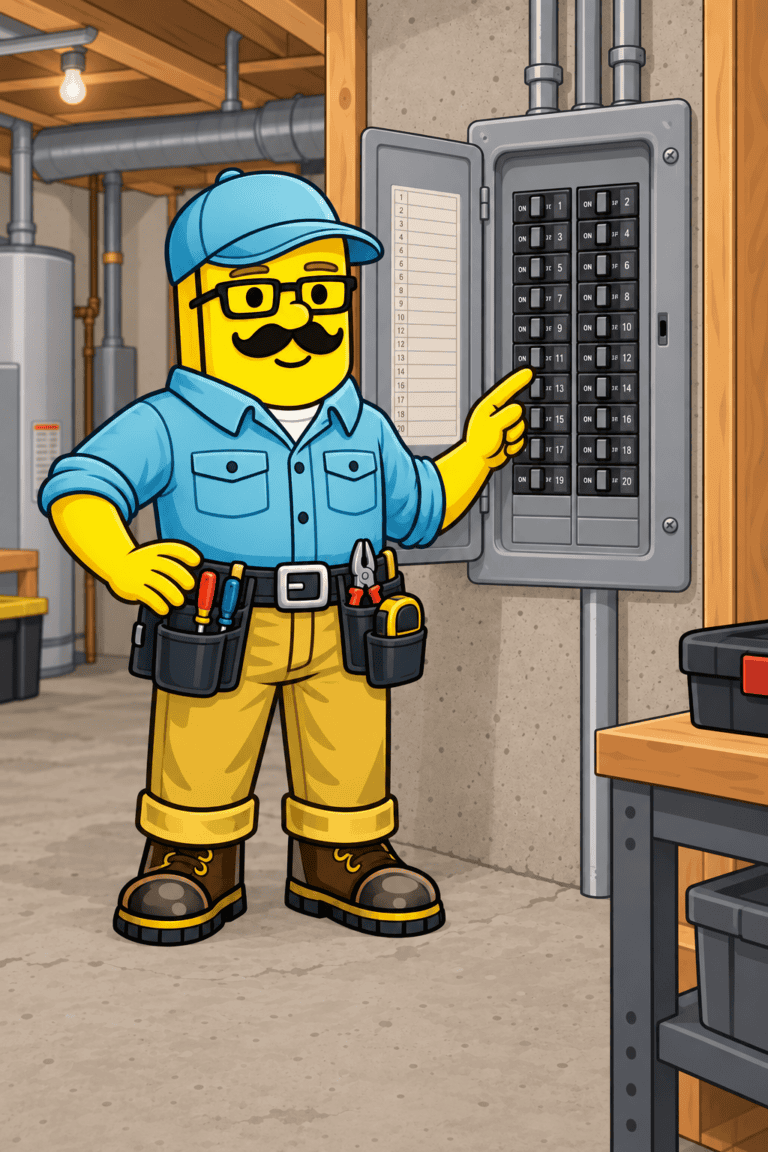
Before you touch any electrical wires, turn off power at the circuit breaker. This isn’t optional. Don’t just flip the switch to the off position – go to your breaker panel and turn off the circuit that controls that switch.
If you’re not sure which breaker controls the switch, turn on the light, then flip breakers until the light goes out. That’s your circuit.
Once the breaker is off, go back to the switch and test it. Flip the switch. If the light stays off, you’ve got the right breaker. But don’t assume that’s proof the power is off at the switch.
Use a voltage tester to confirm. Touch the tester to the switch terminals or wires. If the tester lights up or beeps, there’s still voltage present. Find the correct breaker. If the tester shows no voltage, it’s safe to proceed.
Why is this critical? Because touching a live wire completes a circuit through your body. That current can cause serious injury or death. Electrical work is safe when you follow safety protocols. It’s dangerous when you skip them.
Understanding Light Switch Wiring
The wiring is the part that intimidates most people. But for a standard single-pole switch – the kind that controls one light from one location – the wiring is simple.
What Is a Single-Pole Switch?
A single-pole switch controls one light or set of lights from one location. It has two terminals (usually brass colored) and a ground screw (green). This is the most common type of switch and the one you’ll replace most often.
It’s different from a 3-way switch, which has three terminals and allows you to control a light from two different locations (like at the top and bottom of stairs). We’ll address those briefly later, but for now we’re focused on single-pole switches.
Wire Colors and What They Mean
Electrical wiring follows a color code that tells you what each wire does.
Black wire: This is the hot wire. It carries current from your breaker panel to the switch and then to the light. This is the wire that can shock you if power is on. On a light switch, the black wire connects to one of the brass terminals.
White wire: This is the neutral wire. In most switch boxes, you won’t have a white wire connected to the switch itself – the white wires will be connected to each other with a wire nut. But some newer switches (like smart switches and timers) require a neutral connection. If you’re replacing a standard switch with a standard switch, you usually won’t touch the white wires.
Green or bare copper wire: This is the ground wire. It connects to the green screw on the switch. The ground wire provides a path for current if something goes wrong, preventing the switch box or switch cover from becoming electrified.
How the Wiring Works
When you flip a switch to the “on” position, you’re completing a circuit that allows current to flow from the hot wire, through the switch, to the light. When you flip it to “off,” you’re breaking that circuit and stopping current flow.
The switch sits in the middle of the hot wire path. Current comes in on one terminal, the switch either allows it through or blocks it, and current goes out the other terminal to continue to the light.
That’s why a single-pole switch has two terminals – one for incoming hot and one for outgoing hot. Which wire goes to which terminal usually doesn’t matter on a single-pole switch, but if there are markings (like “LINE” and “LOAD”), follow them.
How to Replace a Light Switch: Step-by-Step
Once you understand the wiring, the actual replacement process is straightforward.
Remove the Cover Plate
With power confirmed off, unscrew the switch cover plate. Usually it’s one screw in the center. Set the screw and plate aside.
Test for Power Again
Even though you turned off the breaker, test one more time with a voltage tester. Touch the tester to the brass terminals on the side of the switch. No light or beep means no power. If there’s voltage, stop and find the correct breaker.
Unscrew and Remove the Switch
Two screws hold the switch to the electrical box – one at the top, one at the bottom. Unscrew both and carefully pull the switch out of the box. Don’t yank on it – wires are attached to the back.
Pull the switch out far enough that you can see all the wire connections clearly.
Note the Wire Configuration
Before you disconnect anything, look at which wires connect where. Most single-pole switches have:
- Two black wires connected to the brass terminals (or one black, one red)
- One ground wire connected to the green screw
- White wires connected to each other with a wire nut (not touching the switch)
If your configuration is different, take a photo before disconnecting anything.
Disconnect the Old Switch
Loosen the terminal screws (turn counterclockwise) and pull the wires out. If wires are pushed into holes in the back of the switch instead of wrapped around screws, you’ll need to press the release slot with a small screwdriver to pull them out.
Remove the ground wire last.
Inspect the Wires
Look at the ends of the wires. If they’re damaged, corroded, or the insulation is cracked, trim about half an inch off with wire strippers and strip new wire to expose about 3/4 inch of bare copper.
If the wire ends are clean and intact, you can reuse them as-is.
Connect the New Switch
Take your new switch and identify the terminals:
- Two brass terminals on one side (these take the black or red hot wires)
- One green screw for ground
Connect the ground wire first. Wrap the bare copper wire clockwise around the green screw and tighten the screw. The wire should be snug under the screw head with no bare copper showing beyond the screw.
Connect the two hot wires to the brass terminals. It doesn’t matter which wire goes to which brass terminal on a single-pole switch. Wrap each wire clockwise around its terminal screw and tighten securely. Make sure no bare wire is exposed – all bare copper should be under the screw.
Secure the Switch in the Box
Carefully push the switch back into the electrical box. The wires will fold back into the box – make sure they’re not pinched or twisted sharply.
Align the switch so it’s straight (use a level if you want to be precise) and screw it into the box with the two mounting screws.
Install the Cover Plate
Place the cover plate over the switch and secure it with the center screw. Don’t overtighten – plastic cover plates crack easily.
Turn Power Back On and Test
Go back to the breaker panel and turn the breaker back on. Return to the switch and test it. Flip it on – the light should come on. Flip it off – the light should go off.
If it doesn’t work, turn the breaker back off and check your wire connections. A loose wire is the most common cause of a switch not working after installation.
What About 3-Way Switches?
If you have a light that’s controlled from two locations – like a hallway light with switches at both ends, or a stairway light controlled from upstairs and downstairs – those are 3-way switches.
3-way switches have three terminals instead of two, and the wiring is more complex. The switches work in pairs, and the wire configuration determines which combination of switch positions turns the light on.
Replacing a 3-way switch requires understanding traveler wires and common terminals. It’s more involved than a single-pole switch, and if you’re not comfortable with electrical work, a 3-way switch is a good place to call an electrician.
We’ll cover 3-way switches in detail in a future article. For now, if you encounter a switch with three terminals plus ground, leave it alone unless you’re confident in your electrical knowledge.
Common Mistakes to Avoid
Not Turning Off Power
This is the most dangerous mistake. Even experienced electricians don’t take shortcuts on this. Turn off the breaker. Test with a voltage tester. Never assume.
Reversing Hot and Neutral
On a standard single-pole switch this usually doesn’t cause problems, but on switches that require neutral (like smart switches), wiring it backwards can damage the switch or create a shock hazard.
Loose Wire Connections
A wire that’s not tightly secured under the terminal screw will arc, overheat, and potentially cause a fire. Tug gently on each wire after connecting it to make sure it won’t pull out.
Pushing Too Much Bare Wire Into the Box
If too much bare copper is exposed on a wire, it can touch the metal box or another wire and cause a short. Only about 3/4 inch of bare wire should be exposed past the insulation, and all of it should be under the terminal screw.
When to Call an Electrician
Light switch replacement is a manageable DIY project for standard single-pole switches. But there are situations where calling a professional is the better choice.
If you have a 3-way or 4-way switch setup, the wiring is complex enough that hiring an electrician makes sense unless you’ve studied the wiring diagrams thoroughly.
If your house has aluminum wiring instead of copper (common in houses built in the 1960s and 70s), don’t attempt electrical work yourself. Aluminum wiring requires special techniques and connectors.
If there’s no ground wire in the box (just black and white wires), you can still replace the switch, but you need to understand the implications. An electrician can advise on whether upgrading the wiring is needed.
If you open the switch box and find multiple switches controlling different lights all wired together in one box, that’s more complex than a simple replacement. An electrician can ensure everything gets wired correctly.
And if you’re simply not comfortable working with electricity, there’s no shame in hiring a professional. Electrical work requires following safety protocols carefully, and if you’re not confident you can do that, hiring someone who does this daily is the safer choice.
Final Thoughts From Stud Finder Studio
Light switch wiring seems mysterious until you understand it. Then it’s logical. Black wire to brass terminal. Ground wire to green screw. Tighten everything securely. Test before closing up.
The actual mechanics are simple. The challenge is being disciplined about safety. Turn off the breaker. Test to confirm power is off. Don’t take shortcuts.
Single-pole switches are a good entry point for DIY electrical work. They’re simple, they’re low-stakes (you’re not messing with 240V circuits or complex wiring), and successfully replacing one builds confidence for slightly more complex projects.
Just remember: electricity doesn’t give warnings. It doesn’t shock you a little bit first to let you know you made a mistake. Follow safety protocols every time, treat every wire as if it’s live until you’ve tested it, and electrical work stops being dangerous and becomes straightforward.
Related Articles You Might Find Helpful:
How to Stop a Running Toilet (And Why It Happens) – Plumbing fixes
How to Install a GFCI Outlet (And When You Need One) – Essential electrical safety
Where Is My Main Water Shutoff Valve? (And Why You Should Find It Today) – Critical safety knowledge
How to Unclog a Drain (The Method That Actually Works) – Common home repair