
How to Stop a Running Toilet (And Why It Happens)
You’re lying in bed trying to sleep when you hear it. That steady sound of water running in the bathroom. Not loud, but constant. Persistent. You know what it means – the toilet is running again, and it’s not going to stop on its own.
A running toilet isn’t just annoying. It’s wasting water every minute it runs, which shows up on your water bill. And if something is continuously running, that usually means something inside the tank has failed or shifted. The longer you ignore it, the more water you’re wasting and the more likely something else will wear out.
The good news is that most running toilets can be fixed in under 30 minutes with basic tools and inexpensive parts. You don’t need a plumber for this.
Quick Answer
A toilet keeps running when water continuously flows into the bowl or tank after flushing. The most common causes are a worn flapper (the rubber seal at the bottom of the tank), a misadjusted fill valve, or a chain that’s too short or tangled. Most running toilets can be fixed by replacing the flapper, adjusting the float, or repositioning the chain. If water is visibly leaking from the tank into the bowl, the flapper needs attention first.
Why Does My Toilet Keep Running?
A toilet runs when water won’t stop flowing from the tank into the bowl. Understanding why this happens makes fixing it much easier.
The Flapper Is the Usual Culprit
The flapper is the rubber seal at the bottom of the tank that lifts when you flush and then drops back down to seal the tank. Over time, rubber degrades. It gets stiff, warps, or develops mineral buildup that prevents it from sealing properly. When the flapper doesn’t seal, water slowly leaks from the tank into the bowl, and the fill valve keeps running to replace that water.
This is the most common reason toilets run, and it’s also the easiest fix. If you lift the tank lid and see water trickling past the flapper into the bowl, that’s your problem.
The Fill Valve Won’t Shut Off
The fill valve controls water entering the tank after a flush. It’s supposed to stop once the tank reaches the correct water level. If the fill valve doesn’t shut off, water keeps flowing, and eventually it overflows into the overflow tube and down into the bowl.
This happens when the float (the ball or cup that rises with the water level) is set too high, or when the fill valve itself is worn out and no longer responds to the float position.
The Chain Is Wrong
The chain connects the flush handle to the flapper. If it’s too short, the flapper can’t fully close. If it’s too long or tangled, it can get caught under the flapper and prevent it from sealing.
This is a quick fix – just adjust the chain length so there’s a little slack when the flapper is closed, but not so much that it gets tangled.
The Overflow Tube Is Doing Its Job (But Shouldn’t Have To)
The overflow tube is the vertical pipe in the center of the tank. It’s a safety feature – if the tank overfills, water goes down the overflow tube instead of flooding your bathroom. If water is running into the overflow tube constantly, that means the fill valve isn’t shutting off when it should, or the water level is set too high.
When a Running Toilet Becomes a Real Problem
I learned this recently after replacing a failed toilet seal. I went through the whole process – turned off the water supply to the toilet, pulled the toilet, replaced the wax ring, cleaned everything up, and reconnected it. Once done, I reattached the water supply line from the floor to the toilet and turned the water back on.
I flushed to test it, and everything seemed fine. While I was letting my dog outside, I heard dripping in the basement. Went downstairs to find water puddling up on the floor.
I ran back upstairs. The toilet was still running and had started overflowing. I immediately shut off the supply valve, wiped up the water on the floor, and tried to figure out what went wrong. Turns out the valve connection I’d just reattached wasn’t properly seated. I had to disconnect it and reseat it correctly. Once that was done, the toilet ran normally.
The point is, running toilets aren’t always just annoying background noise. They can escalate quickly if something else is wrong.
How to Diagnose What’s Causing the Running
Before you fix anything, you need to know what’s actually broken.
Lift the Tank Lid
Take the lid off the toilet tank and set it aside carefully (porcelain breaks easily). Look inside. Is water visibly flowing into the bowl through the flapper? Is the water level above the overflow tube? Is the fill valve continuously running?
Just looking tells you most of what you need to know.
Check the Flapper
Press down on the flapper with your hand. If the running stops, the flapper isn’t sealing properly. Either it’s worn out, or something (like a mineral deposit or a piece of the chain) is preventing it from closing completely.
Listen for Hissing
If you hear a hissing sound, that’s water escaping somewhere. Usually it’s the flapper leaking, but it can also be the fill valve or a crack in the tank (rare, but possible).
The Food Coloring Test
If you’re not sure whether the flapper is leaking, drop a few drops of food coloring into the tank. Don’t flush. Wait 10-15 minutes, then check the bowl. If the water in the bowl has changed color, the flapper is leaking and needs to be replaced.
How to Fix a Running Toilet
Most fixes are straightforward and don’t require special tools.
Replace the Flapper
If the flapper is the problem (and it usually is), turn off the water supply to the toilet using the shutoff valve on the wall or floor behind the toilet. If you’re not sure where this valve is or how to use it, Where Is My Main Water Shutoff Valve? covers finding and operating shutoff valves throughout your home.
Flush the toilet to empty the tank. Unhook the old flapper from the mounting posts on either side of the overflow tube, and disconnect the chain from the flush handle lever. Take the old flapper to a hardware store to match it, or buy a universal flapper that fits most toilets.
Install the new flapper by hooking it onto the mounting posts and reconnecting the chain. Turn the water back on, let the tank fill, and test it by flushing. The running should stop.
Adjust the Fill Valve and Float
If the fill valve won’t shut off, check the float position. The water level in the tank should be about an inch below the top of the overflow tube. If it’s higher than that, the float is set too high.
For ball floats (the floating ball on a rod), bend the rod downward slightly to lower the float. For cup-style floats (which slide up and down the fill valve), there’s usually a clip or screw you can adjust to lower the float height.
Lower the float, let the tank fill, and see if the fill valve shuts off properly. If it doesn’t, the fill valve itself may need to be replaced.
Fix or Replace the Chain
Inspect the chain that connects the flush lever to the flapper. It should have just enough slack that the flapper can fully seat when closed, but not so much slack that it gets tangled or stuck.
If the chain is too long, shorten it by hooking it into a different hole on the flush lever or by removing some links. If it’s damaged or corroded, replace it – chains are inexpensive and come with most replacement flappers.
Clean the Valve Seat
Sometimes the flapper is fine, but the valve seat (the surface the flapper seals against) has mineral buildup. Turn off the water, empty the tank, and gently clean the valve seat with a damp cloth or a bit of fine-grit sandpaper. Don’t scratch it, just remove any buildup that’s preventing a good seal.
What If the Toilet Still Runs?
If you’ve replaced the flapper, adjusted the float, and fixed the chain, but the toilet still runs, there are a few less common issues to check.
Cracks in the tank or overflow tube: Inspect the tank carefully for hairline cracks. If you find one, the tank needs to be replaced. This isn’t a DIY fix unless you’re comfortable with plumbing.
Worn fill valve: If adjusting the float doesn’t stop the fill valve from running, the valve itself is probably worn out and needs replacement. This is still a DIY-friendly fix, but it’s more involved than replacing a flapper.
Improper installation: If this is a relatively new toilet or you recently had work done, double-check that all the internal parts are installed correctly. Sometimes a flapper is the wrong size for the valve seat, or a fill valve isn’t seated properly.
At this point, if you’re not comfortable diagnosing further, calling a plumber is reasonable. Most running toilet fixes cost under $200 for parts and labor, which is usually less than the water you’ll waste if you let it keep running for weeks.
Understanding Your Toilet Parts
Knowing what you’re working with makes repairs much easier. Here are the two most common parts you’ll need:
Toilet Flapper
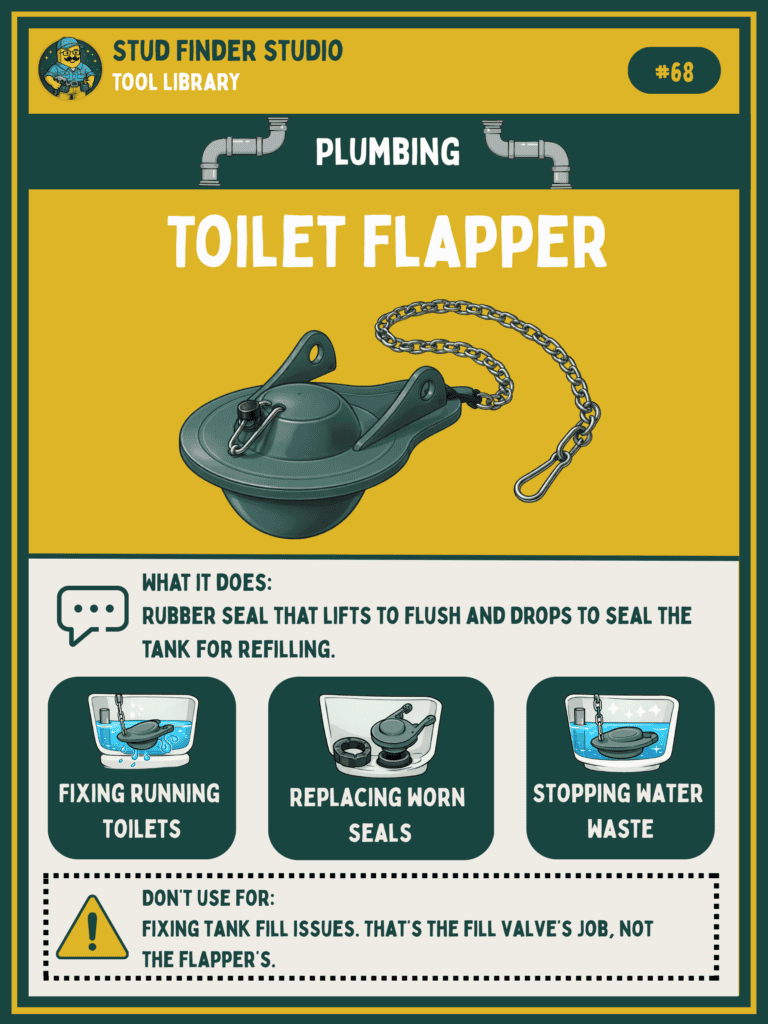
What it is: Rubber seal at the bottom of the tank that opens when you flush and closes to refill the tank
Common issues: Warps over time, mineral buildup prevents sealing, chain tangles underneath
Lifespan: 3-5 years depending on water quality
Replacement cost: $5-15
Fill Valve
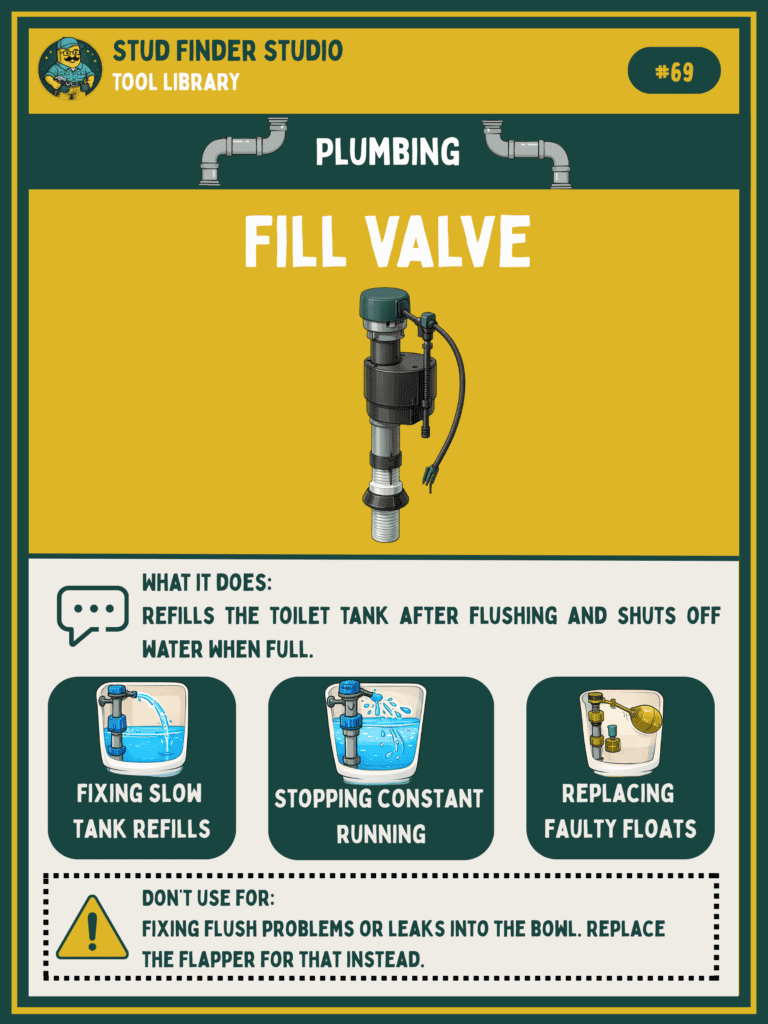
What it is: Mechanism that controls water entering the tank after a flush
Common issues: Won’t shut off, hissing sound, float doesn’t respond properly
Lifespan: 5-7 years
Replacement cost: $15-30
For more detailed guides on these and other plumbing tools every homeowner should understand, check out our Tool Reference Library.
Why This Matters Beyond the Annoyance
A running toilet can waste 200 gallons of water per day. That’s not a typo. If your toilet runs continuously for a month, you’re flushing thousands of gallons straight into the sewer and paying for every gallon.
Even a slow leak – the kind where you can barely hear the water running – wastes 30+ gallons a day. Over a year, that adds up to real money on your water bill for absolutely nothing.
Fixing a running toilet isn’t just about stopping the noise. It’s about not paying for water you’re not using.
Final Thoughts From Stud Finder Studio
A running toilet feels like background noise you can ignore. It’s not dramatic. It doesn’t flood the floor (usually). It just… runs. And that makes it easy to put off fixing.
But every day you ignore it, you’re wasting water and money. And the longer the toilet runs, the more wear you’re putting on other parts that will eventually fail too.
The fix is almost always simple. A $10 flapper and 20 minutes of your time stops the running, drops your water bill, and gives you one less thing to listen to while you’re trying to sleep.
Toilets aren’t complicated. When you understand what’s supposed to happen inside that tank, fixing what’s broken stops being mysterious and starts being straightforward. And once you’ve done it once, you’ll never call a plumber for a running toilet again.
Related Articles You Might Find Helpful:
Studs vs Drywall Anchors: When Each One Actually Makes Sense – Home maintenance decision framework
Where Is My Main Water Shutoff Valve? (And Why You Should Find It Today) – Essential for toilet repairs
How to Mount a TV Without Regretting It Later – Home systems and structure
How to Hang Anything on a Wall Without Ruining Drywall – Understanding your home’s systems