
Outlet Not Working but Breaker Is Not Tripped: What to Check First
Outlet not working but breaker not tripped is one of the more confusing electrical moments in a house, because the instinct is to go straight to the panel, and the panel tells you nothing is wrong. That is usually true. The breaker really is fine. The outlet is dead anyway. Before assuming a wiring problem inside the wall, there are a few places to check first, and two of them explain most cases people run into.
Quick Answer
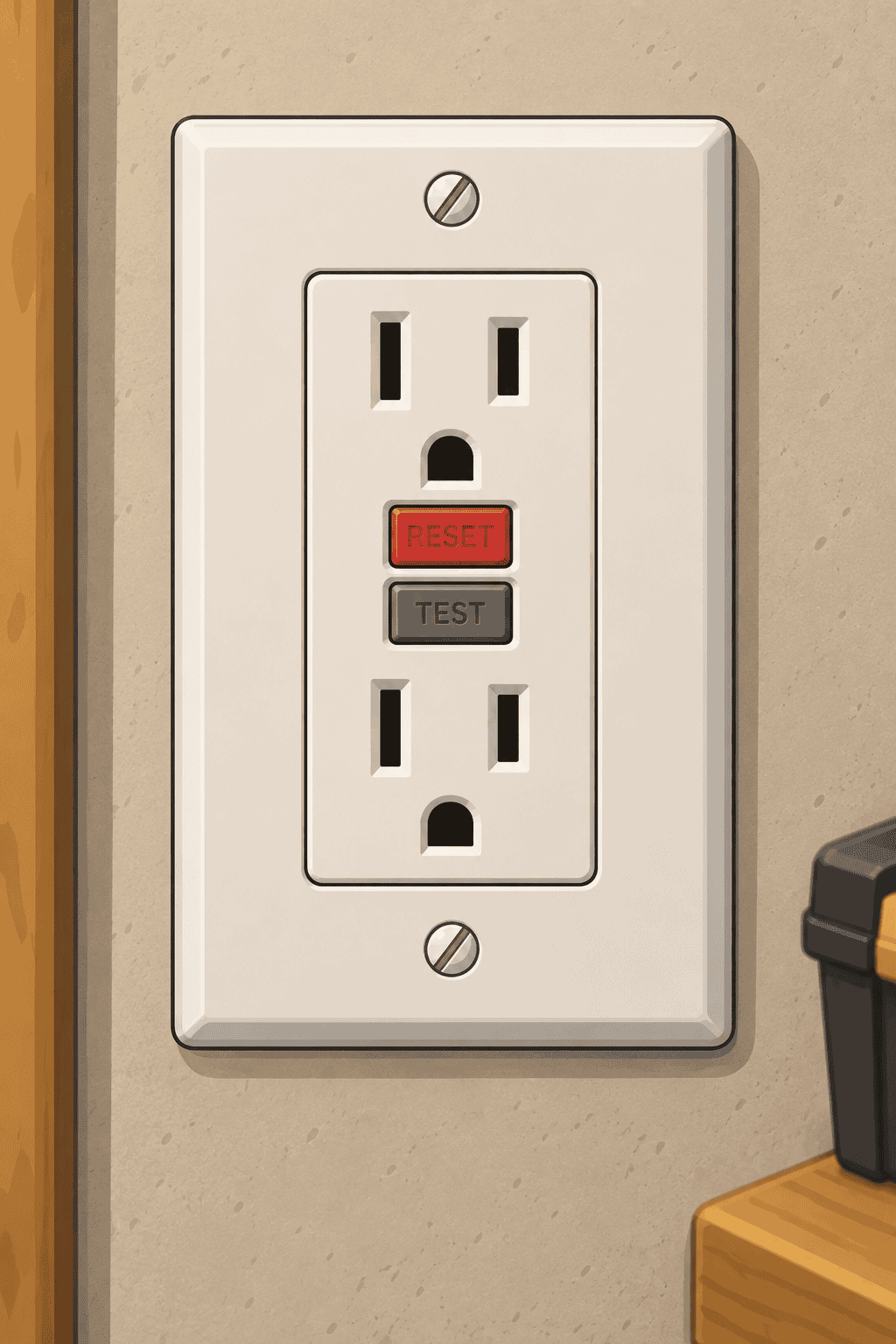
If an outlet is not working but the breaker looks fine, check for a tripped GFCI outlet first, since one GFCI can control several other outlets downstream, sometimes in a different room entirely. Press reset on every GFCI in the house, not just the closest one. Next, check whether the outlet is controlled by a nearby wall switch. Then look at the breaker again more closely, since AFCI and GFCI breakers can trip to a middle position rather than flipping fully to off, which looks like nothing happened. If none of that restores power, stop and treat it as a wiring issue rather than something to keep testing yourself.
The outlet that is actually causing the problem is often not the one that stopped working. A single GFCI outlet can protect multiple standard outlets wired downstream on the same circuit, and that protection is not limited to the same room. A GFCI in a bathroom can control an outlet in a bedroom down the hall. A GFCI in a garage can control an exterior outlet on the other side of the house. If you only check the outlet that stopped working, you can spend twenty minutes convinced something is broken when the actual fix is thirty feet away.
Walk the house and press reset on every GFCI outlet you can find, not just the one nearest the dead outlet. Bathrooms, kitchens, garages, and any exterior outlet are the most common locations. This single step resolves a large share of these situations.
Check for a wall switch controlling the outlet
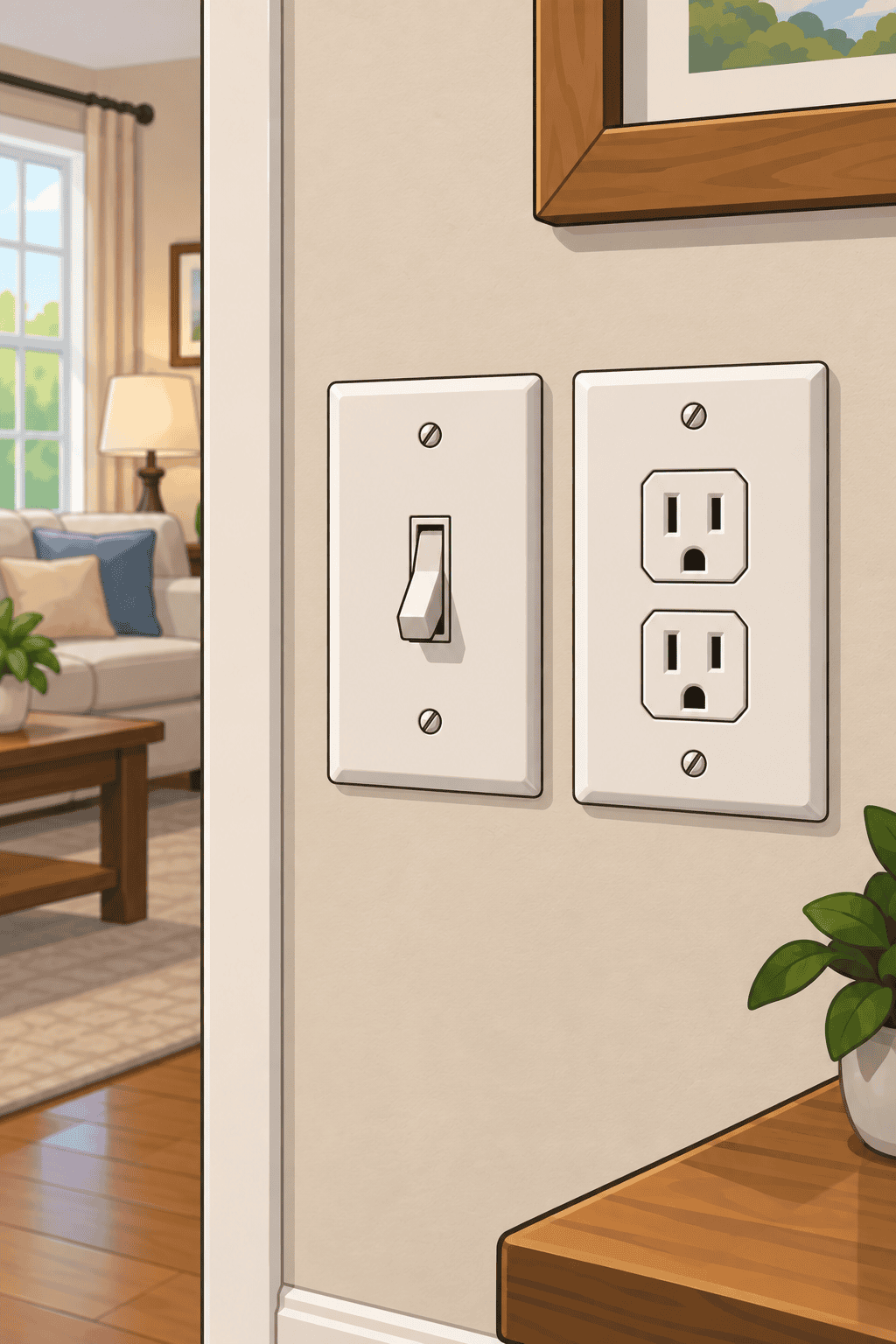
Some outlets, usually in living rooms and bedrooms, are half-hot, meaning a wall switch controls power to part or all of the outlet. This is common enough that it gets overlooked constantly, because most people do not expect a regular-looking outlet to be switch controlled. If there is a switch nearby that does not obviously control a light, flip it and check the outlet again.
The breaker might actually be tripped
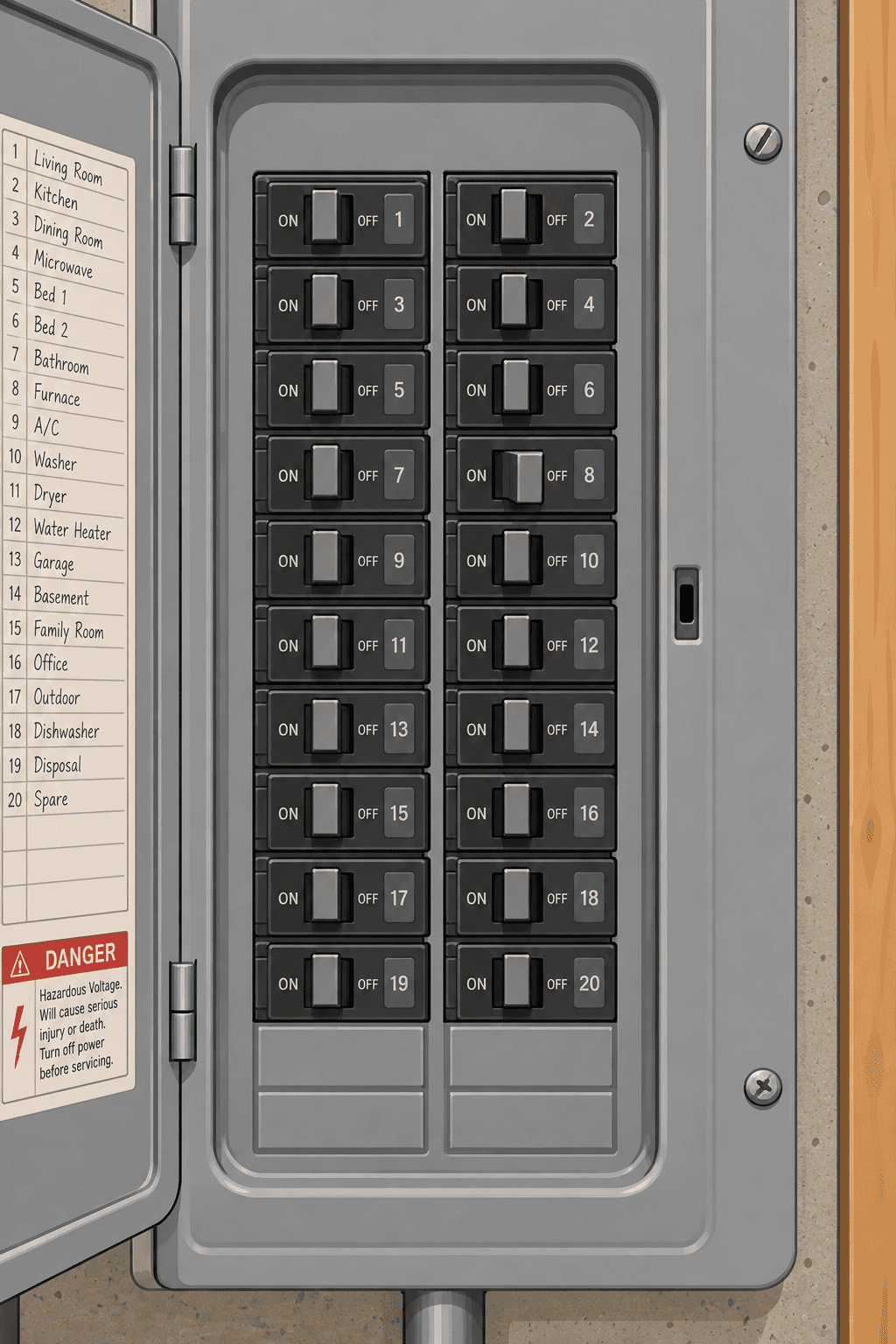
Standard breakers trip in an obvious way, fully to the off position, easy to spot. AFCI and GFCI breakers do not always behave the same way. They can trip to a middle position that looks close enough to on that it gets missed on a quick glance at the panel. If your home has these breaker types, which is common in circuits added or updated in the last couple decades, look closely rather than scanning for an obviously flipped switch. Flip anything that looks even slightly off fully to off, then back to on.
This is also where a voltage tester earns its cost. Instead of guessing whether a breaker or outlet has power, confirm it directly before spending more time troubleshooting by hand.
If you have checked GFCIs throughout the house, checked for a wall switch, and looked closely at the breaker for a middle-position trip, and the outlet is still dead, that is the point to stop rather than open the outlet up. A dead outlet with no obvious cause can mean a loose connection, damaged wiring inside the wall, or a failed outlet itself, and diagnosing which one it is safely requires opening an electrical box and testing wires directly. If you see scorch marks, smell anything burning, or the faceplate feels warm, stop immediately and treat it as something beyond a simple reset.
Final Thought
Most outlets that stop working without a tripped breaker come down to one of two things: a GFCI somewhere else in the house that tripped and cut power downstream, or a breaker that tripped in a way that does not look tripped at a glance. Both are simple to check and do not require opening anything up. If neither explains it, that is where DIY troubleshooting should end and a proper diagnosis should begin.
Related Articles:
- How to Install a GFCI Outlet (And When You Need One) – How GFCI protection actually works
- Why Does My Breaker Keep Tripping? – Understanding what a breaker is telling you
- The $17 Tool That Should Be in Every Homeowners Toolbox – Confirm power before you keep guessing
- Browse the Full Tool Library – Reference cards for every tool