
Simple fixes, beginner-friendly steps, and a warmer house, without needing a contractor on speed dial
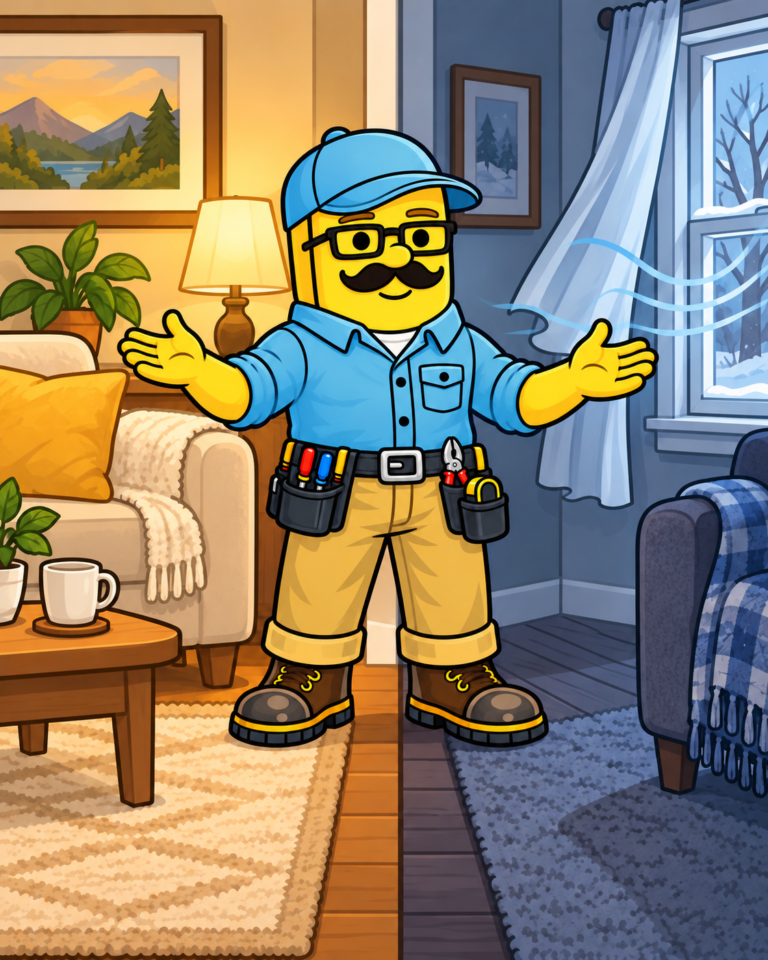
If you’ve ever walked through your living room in January and thought, “Why does my house feel like a poorly insulated igloo?” Welcome to the club. Most homes leak more heat than homeowners realize. Not from dramatic problems… but from a bunch of tiny, sneaky issues that build up over the years.
The good news? Weatherproofing doesn’t require pro-level skills, and it doesn’t have to cost much. In fact, most of the biggest improvements come from inexpensive fixes you can knock out in a single afternoon.
This guide walks you through the most common problems, why they happen, and how to fix them, all in beginner-friendly language. And throughout, you’ll see natural spots where using simple tools or budget-friendly home products make the job even easier.
Affiliate Disclaimer: This post contains affiliate links, which means I may earn a small commission (at no extra cost to you) if you choose to purchase through them. Thanks for supporting this cozy little corner of the internet
1. Drafts Around Windows & Doors
If one room in your house is always colder than the rest, drafts are almost always to blame. Windows and doors are the #1 place homeowners lose heat, especially in older houses where seals have slowly broken down.
Why this happens
Frames expand and contract with weather. Caulk shrinks. Weatherstripping wears out. Even the tiniest gap can let in cold air faster than you’d think.
And here’s the kicker: Most people don’t know they have drafts until they fix them and realize how much warmer the room feels.
How to fix it (beginner-friendly)
This is where beginners get the biggest bang for their buck:
- Add or replace weatherstripping around the sash and door frame.
- Install a door sweep if you see light coming in under your door.
- Re-caulk cracked or missing caulk around the interior or exterior frame.
- Use window insulation film (“shrink wrap” kits)
This is a game changer for older windows. Stick the film around the frame, hit it with a hair dryer, and it tightens into a clear, airtight barrier that blocks drafts instantly. It’s cheap, it works, and it doesn’t damage the window.
Quick trick
Hold a lit incense stick or candle near the frame. If the smoke flickers or moves sideways, you found a draft.
2. Heat Escaping Through the Attic
If the top floor of your home is always colder (or hotter) than the rest, your attic insulation probably needs attention. This is one of the biggest contributors to high energy bills.
Why this happens
Warm air naturally rises. If your attic doesn’t have enough insulation, that heat escapes through the roof. Gaps around pipes, vents, wiring, and the attic hatch act like open invitations for warm air to leave.
How to fix it
- Add more insulation.
Blown-in insulation is the easiest method for beginners, and most hardware stores rent the blower for free when you buy a few bags. - Seal all gaps first.
Look around plumbing vents, wires, and the attic hatch. Use low-expansion spray foam to fill them. - Weatherstrip your attic door.
Most people forget this, but it’s basically a big hole to the outdoors if not sealed properly.
Fixing the attic first creates immediate comfort, especially upstairs.
3. Hidden Air Leaks: Outlets, Switches & Trim
This is the weatherproofing step almost nobody thinks about, but once you know it’s a thing, you can’t unsee it.
Why this happens
Exterior wall outlets and switches are often installed directly into the wall cavity. That means cold air sitting inside the wall can come right through the outlet box.
How to fix it
- Add foam outlet gaskets behind your outlet and switch covers.
These cost almost nothing and take minutes to install. - Seal trim gaps with clear or paintable caulk.
- Install airtight covers for older recessed lights.
Small steps, big comfort difference, especially in drafty rooms.
4. Cold Air & Moisture Coming Up From the Basement or Crawlspace
Cold floors. Musty smells. A basement that feels like it belongs in a different climate. All of this usually points to weak air sealing down below.
Why this happens
Basements and crawlspaces are notorious for air leaks, especially along the rim joist (where the wood framing sits on the foundation). Crawlspaces often have bare earth floors, which let moisture and humidity rise into the home.
How to fix it
- Spray foam the rim joists.
This is one of the most effective single weatherproofing steps you can take. - Add a vapor barrier to crawlspaces.
Lay down a sheet of 6-mil plastic and tape the seams. This dramatically reduces humidity. - Use a dehumidifier if your basement stays damp.
This alone can make your home feel warmer and smell fresher.
5. Exterior Gaps That Let Water In
Air leaks are annoying. Water leaks are expensive.
They’re also the most preventable issue on this list.
Why this happens
The outside of your home is constantly exposed to sun, rain, freezing temps, and settling. Caulk eventually cracks or pulls away from siding, trim, vents, and penetrations.
How to fix it
- Walk around your home once a year.
- Look for gaps around siding, exterior vents, hose bibs, and trim.
- Use a high-quality exterior sealant to fill them.
Fixing these areas prevents rot, mold, and expensive water damage later.
6. Ice Dams (Cold Climate Must-Know)
If you live somewhere snowy, ice dams are a winter classic, and not the fun kind.
Why this happens
Warm air escaping into the attic melts snow unevenly. The meltwater runs down the roof, hits the cold eaves, refreezes, and forms a ridge of ice. Water backs up behind it and sneaks under the shingles.
How to fix it
- Improve attic insulation (especially low areas).
- Make sure soffits and ridge vents are open and breathing.
- Seal ceiling penetrations.
- Use a roof rake to safely remove snow after storms.
Stop the heat loss → stop the ice dam.
Beginner-Friendly Weatherproofing Checklist
Inside the house:
✔ Check each room for drafts
✔ Replace weatherstripping on windows and doors
✔ Install outlet gaskets
✔ Inspect attic insulation
✔ Seal attic gaps
Outside the house:
✔ Check siding and trim for cracks
✔ Inspect caulk around windows and vents
✔ Clear gutters and downspouts
✔ Add gutter extensions to push water away
Basement/Crawlspace:
✔ Look for damp walls or musty smells
✔ Seal rim joists
✔ Install vapor barrier if needed
[mailerlite_form form_id=1]
Final Thoughts
Weatherproofing isn’t about perfection, it’s about stacking small upgrades that make your home warmer, quieter, safer, and cheaper to run. Most of these fixes cost under $30 and take under an hour. And if you do them before winter hits, your energy bill will thank you.
Each step is beginner-friendly. Each tool is easy to learn. And every improvement adds up.