
Dryer Not Heating but Still Running? What to Check First
The dryer sounds normal. The drum turns, the timer finishes, and you open the door expecting warm, dry clothes. Instead, you find damp laundry.
Before buying a heating element or running the same load again, figure out which problem you actually have: a dryer that produces no heat, or a dryer that gets warm but does not dry properly. That difference tells you where to start.
Quick Answer
A dryer that runs without heating may have a no-heat setting selected, an electrical supply problem, a gas supply issue, or a fault inside its heating system. Check the cycle and temperature settings first, then follow the checks for your dryer type.
If clothes get warm but remain damp, start with the lint screen, exhaust airflow, and load. A heating element is not automatically the problem.
Stop using the dryer if you notice smoke, scorching, a burning electrical smell, or a breaker that keeps tripping. If you smell gas, leave the building without operating switches or unplugging anything. Call your gas supplier or emergency services from outside.
Start With the Symptom
“Not drying” can describe several different problems. Choose the situation that matches yours before taking anything apart.
| What your dryer does | What to check first |
|---|---|
| Tumbles, but clothes never warm on a heated cycle | Cycle settings, then the electrical or gas supply |
| Gets warm, but clothes stay damp | Lint screen, exhaust airflow, and load size |
| Dries on Timed Dry, but stops early on a sensor cycle | Dryness settings, load size, and moisture-sensor care |
| Started having trouble immediately after installation or moving | Installation, supply connections, and crushed ducting |
| Trips a breaker repeatedly or shows signs of overheating | Stop using it and arrange service |
| Runs cooler than your previous dryer and uses heat-pump technology | Model-specific operating and maintenance instructions |
These clues help narrow the problem. They do not prove which part has failed.
First, Check the Cycle and Temperature Setting
Look at both controls. Selecting a drying cycle does not always mean you have selected heat.
Settings such as Air Fluff, Air Only, or No Heat tumble clothing without heating it. A cool-down stage can also explain why the drum feels cool when the cycle finishes.
If there are no warning signs, follow the heated-cycle check in your owner’s manual. An empty sensor cycle is not a reliable test because the machine may stop early when it detects little moisture.
Pay attention to whether the problem happens on every heated cycle or only one setting. That is useful information if you eventually need service.
Electric Dryer Running but Not Heating?
A spinning drum does not prove that a conventional electric dryer is receiving its full electrical supply.
Many full-size U.S. electric dryers use a 208/240-volt supply. A partial supply can allow the motor to run while the heating element cannot operate.
That is why “it turns on” does not completely rule out an electrical problem.
Check the Dryer Breaker Once
If your owner’s manual recommends a breaker reset, switch the dryer off first. With dry hands and a dry, undamaged electrical panel, move the identified dryer breaker fully OFF, then ON once.
Use only the accessible breaker handle. Do not remove the panel cover. If you cannot confidently identify the dryer breaker, ask an electrician.
If the breaker trips again, leave it off and arrange service. Repeatedly resetting it is not a fix.
If the dryer still runs without heating, an electrician or appliance technician can determine whether the problem is the supply, connection, or appliance itself. Testing a dryer receptacle or opening its electrical connections is not a beginner troubleshooting step.
Check your model before applying this advice. Compact electric and heat-pump dryers can have different electrical requirements.
Gas Dryer Running but Not Heating?
A gas dryer uses electricity to operate the drum and controls, while gas supplies the heat. The drum can therefore keep turning when the burner has no gas supply.
Think about when the problem started. Was the dryer recently installed, moved, or disconnected for other work?
If so, have the installer confirm that the supply is correctly connected and turned on. Do not open a valve that may have been deliberately shut off because of a fault.
When the settings and supply have been confirmed but the dryer still does not heat, arrange appliance service. Avoid disconnecting gas fittings, manually lighting the burner, or bypassing safety components.
Clothes Get Warm but Stay Damp? Check the Airflow
For a vented dryer, producing heat is only part of the job. Moist air also needs a clear route outside.
When that route is restricted, the dryer may warm the clothes without removing moisture effectively.
Start With the Lint Screen
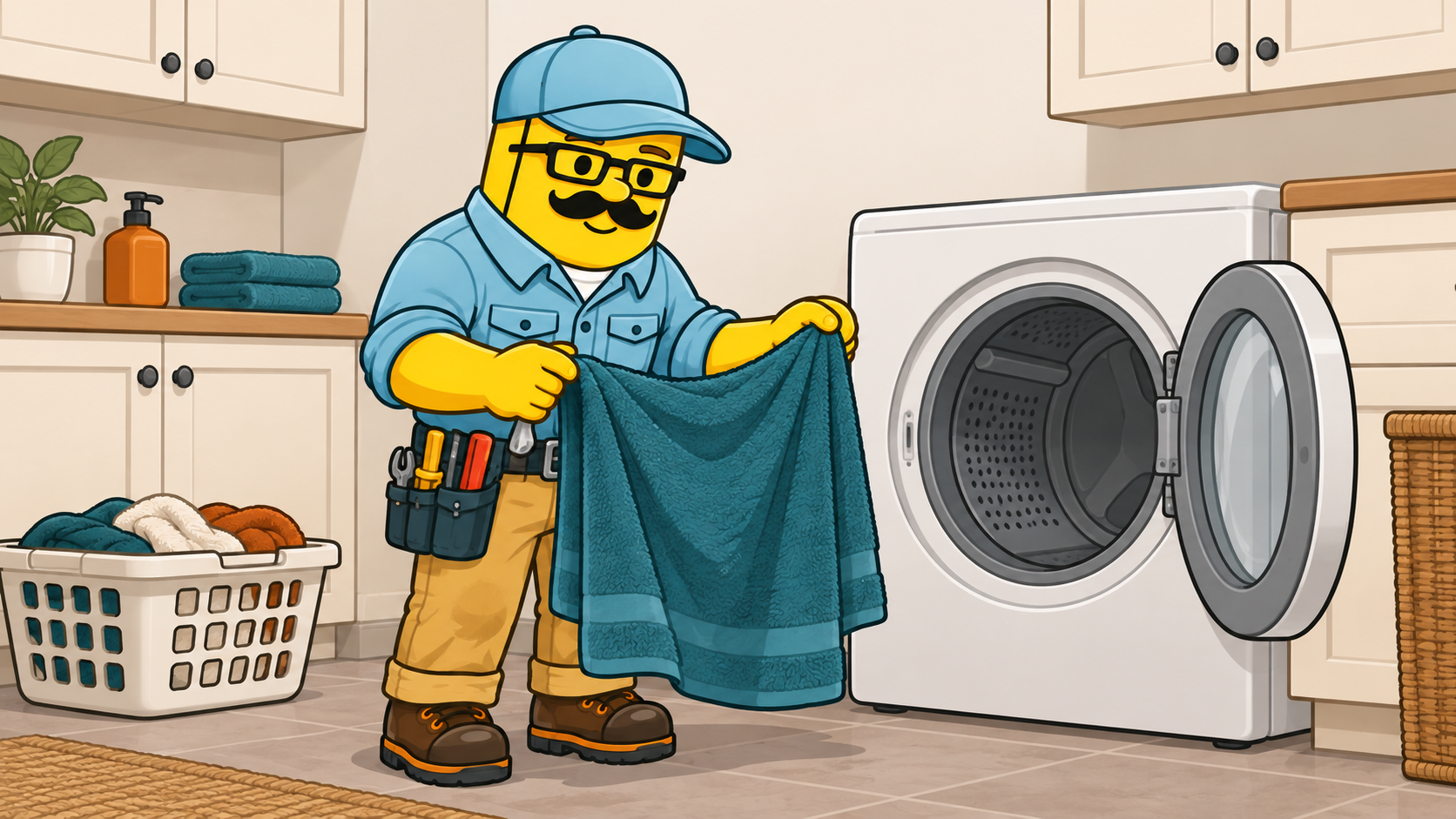
Remove accumulated lint and reinstall the screen correctly before using the machine.
If a film remains on the mesh, follow the cleaning instructions in your owner’s manual. Allow a washed screen to dry completely before putting it back.
A clean lint screen is important, but it does not tell you whether the duct behind the dryer is clear.
Look for a Crushed Exhaust Connection
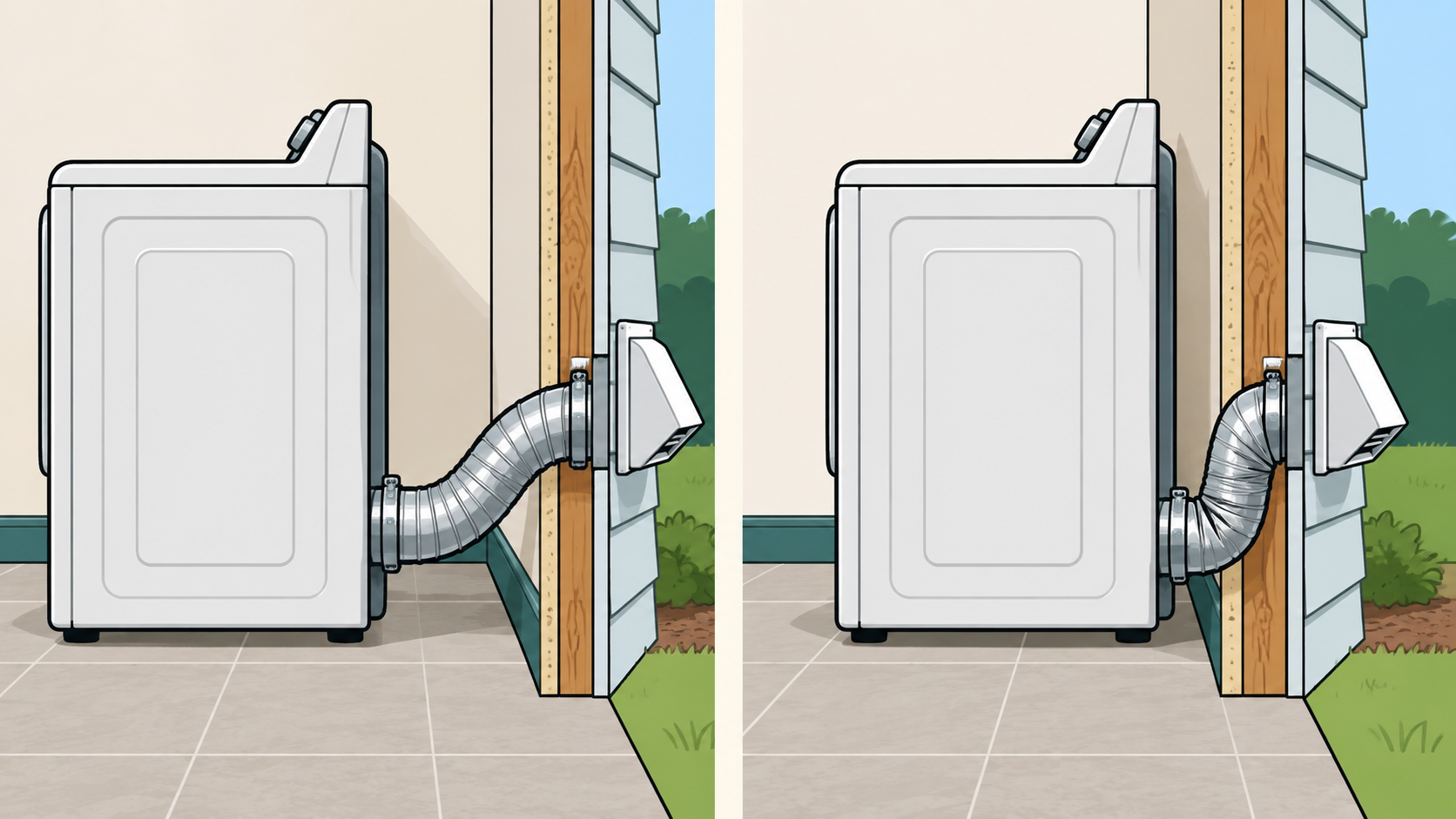
With the dryer off and disconnected from power before cleaning or maintenance, inspect any ducting you can safely see.
A dryer pushed tightly against the wall can flatten or kink its exhaust connection. This is especially worth checking when poor drying began after moving the appliance or rearranging the laundry room.
Do not pull out a heavy or stacked appliance yourself or strain a gas connection to reach the duct.
Check the Outside Vent
During otherwise safe operation, look at the exterior exhaust opening if you can reach it from the ground.
Does the damper open? Is there obvious debris blocking the outlet?
A closed flap or weak airflow warrants further inspection. An opening flap does not prove that the full duct is clear.
Arrange cleaning or inspection if the exhaust route is obstructed, damaged, or inaccessible. Do not disconnect the exhaust and run the dryer into the laundry room as a workaround.
Check What Came Out of the Washer
Sometimes the dryer is dealing with more water than usual.
If clothing comes out of the washer dripping or noticeably wetter than normal, check the selected spin setting and whether the washer completed its cycle properly.
A tightly packed dryer can also struggle. Clothes need space to tumble, and heavy towels mixed with lightweight shirts may not finish drying together.
If a sensor cycle ends before the clothes are dry, check the selected dryness level and your manual’s guidance for small loads and moisture-sensor cleaning.
An early-ending cycle does not automatically mean the heating element has failed.
Have a Heat-Pump Dryer? Use a Different Checklist
A ventless heat-pump dryer works differently from a conventional vented electric dryer.
Lower drying temperatures can be normal, so “it does not feel as hot as my old dryer” is not enough to diagnose a problem.
Follow the model’s instructions for cleaning filters, maintaining any user-accessible heat exchanger, and checking condensate drainage or collection.
Do not look for an outdoor exhaust connection on an appliance designed to operate without one.
Persistent wet loads, error codes, or a sudden change in drying performance still deserve attention. Use the troubleshooting instructions for the actual model rather than a generic heating-element checklist.
When the Basic Checks Don’t Restore Heat
Once the settings, supply, and appropriate maintenance checks are covered, the problem may require internal diagnosis.
Depending on the model, a technician may examine the heating element, burner system, temperature controls, wiring, or thermal protection.
A thermal fuse or cutoff is a safety component. Never bypass it to make the dryer operate. Its effect on the dryer depends on the appliance’s design, and replacing it without correcting the reason it opened can leave the underlying problem unresolved.
You do not need to identify the failed component before making a useful service call.
Save These Details Before Calling
A clear description helps the person diagnosing the problem understand what has already been checked.
| Information to collect | What to write down |
|---|---|
| Model number | Copy the appliance label, not just the brand |
| Dryer type | Conventional electric, gas, or heat pump |
| Exact symptom | “Tumbles normally, but the clothes never warm” |
| Cycle and temperature | The actual settings used |
| When it started | Suddenly, gradually, or immediately after installation |
| Other clues | Error codes, unusual noises, early stopping, or breaker trips |
Keep those details with your maintenance notes or in your Home Project Tracker, so they are easy to find if the problem returns.
Common Questions About a Dryer Not Heating
Does a Dryer That Spins Need a New Heating Element?
Not necessarily. Cycle settings and electrical supply problems can produce the same symptom.
Gas and heat-pump dryers also use different heating systems. Identify the appliance and narrow down the problem before buying parts.
Can a Clogged Vent Cause Heating Problems?
Restricted airflow can interfere with drying and contribute to overheating. It does not prove that the heater has failed.
If the dryer produces no heat at all, its settings and supply still need attention. If it gets warm but dries slowly, airflow is an important starting point.
Should I Keep Running It Until the Clothes Dry?
Do not keep restarting a malfunctioning dryer to force the load dry.
Investigate the poor performance, especially if drying suddenly takes much longer. Stop using the appliance if there are warning signs, restricted venting, or repeated electrical trips.
Should I Call an Electrician or an Appliance Technician?
An appliance technician handles internal dryer faults. An electrician handles problems with the circuit or receptacle. A dryer-vent specialist can address an obstructed or inaccessible exhaust route.
If the problem started immediately after installation, contact the installer first.
Before You Buy a Replacement Part
Start with a precise description: no heat, slow drying, or stopping too soon.
Then follow the checks for your dryer type.
Even if you need a repair, knowing what the appliance is doing helps you explain the problem and avoid buying a part based on a guess.